
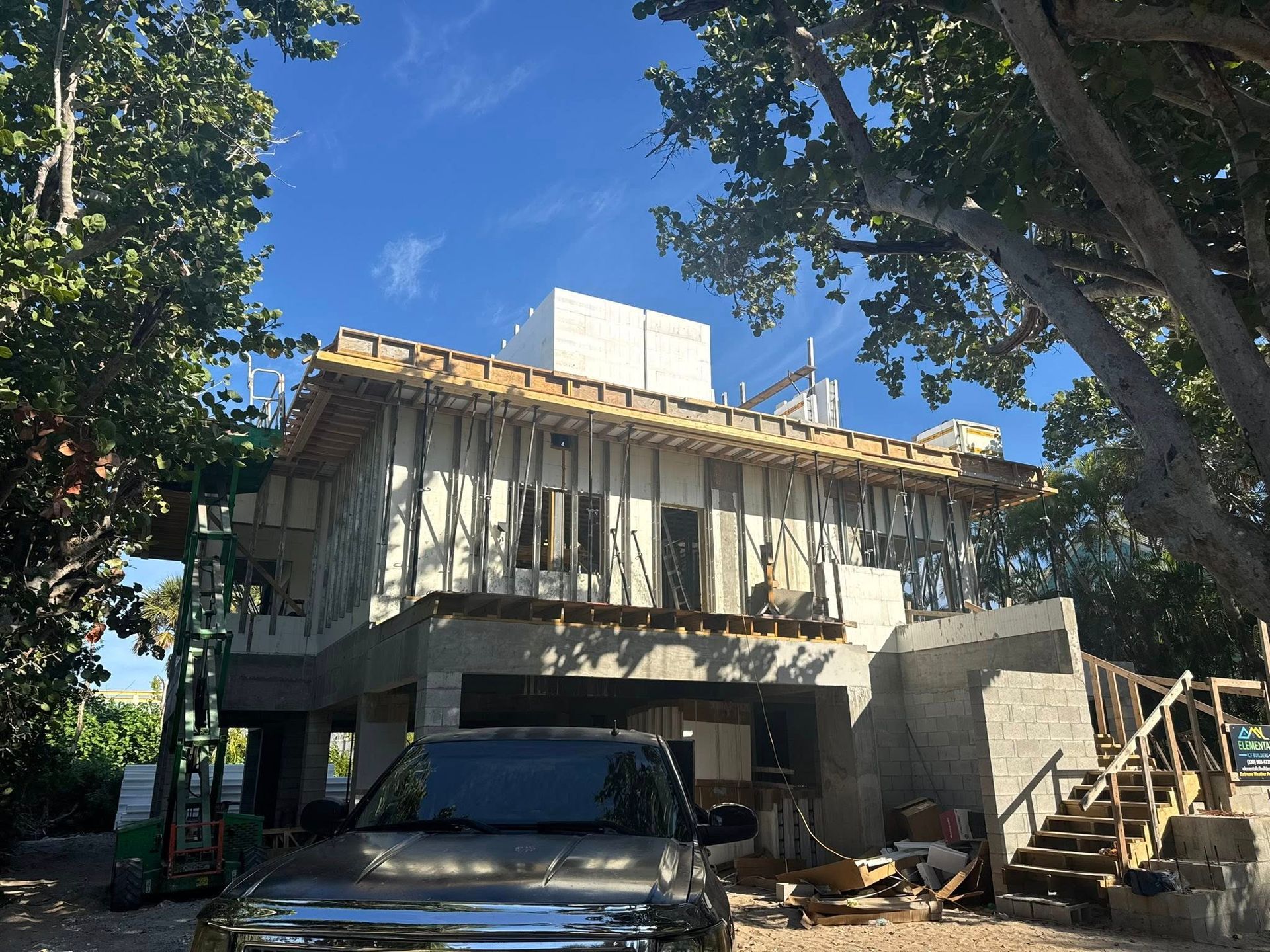
Walls That Stop Debris, Not Just Wind
Extreme Weather-Resistant Construction in Estero for coastal properties where hurricane impacts threaten structural integrity and occupant safety
Reinforced concrete ICF construction designed for hurricane-prone environments addresses the specific failure modes that destroy wood-frame homes during severe weather events in Southwest Florida. Elemental ICF Builders creates concrete wall systems engineered to resist sustained wind pressures exceeding 150 miles per hour, airborne debris traveling at velocities that penetrate conventional sheathing, and the kind of structural racking that causes catastrophic collapse when wind direction shifts rapidly during storm passage. Homeowners in Estero face storm preparation concerns every hurricane season, and demand for construction that remains structurally sound after Category 3 and 4 impacts continues to increase as coastal insurance costs reflect the true replacement risk of traditional building methods.
Concrete wall systems handle impact forces differently than wood framing because the monolithic structure distributes loads across the entire wall plane rather than concentrating stress at individual studs or fasteners. Steel reinforcement runs continuously through the concrete core and ties directly into the foundation, creating a load path that transfers wind uplift and lateral forces into the ground without relying on metal connectors that corrode in salt air or loosen as wood shrinks during dry periods.
Evaluate how reinforced concrete construction addresses the weather risks specific to your coastal location.
What Proper Storm-Resistant Building Requires
Building for extreme weather involves engineering wall assemblies that resist not only peak wind speeds but also the prolonged battering that occurs during slow-moving storms. ICF forms remain in place after concrete cures, which means the insulation layer never compresses or shifts, and the concrete core maintains full thickness without the voids or gaps that develop in wood-framed walls when fasteners pull loose. Fire resistance improves automatically because concrete doesn't ignite or contribute fuel during wildfires, and moisture resistance prevents the hidden rot that weakens wood framing long before visible damage appears.
After a major storm passes, you notice the absence of structural movement, water intrusion through wall penetrations, or the kind of racking damage that requires gutting and rebuilding interior finishes in conventionally built homes. Exterior walls show minimal cosmetic damage because concrete resists impact from airborne debris that shatters vinyl siding and penetrates OSB sheathing. The building remains habitable immediately after the storm, which eliminates the extended displacement periods common when wood-frame homes suffer structural damage or water intrusion that requires mold remediation before occupancy is safe.
Durable construction reduces the frequency of insurance claims and the ongoing maintenance needed to address wind damage, water intrusion, and fastener corrosion that accelerates in coastal environments. The concrete structure doesn't require periodic re-inspection of hurricane straps, sheathing attachments, or the kind of preventive reinforcement retrofits recommended for aging wood-frame homes in high-wind zones.
Answers to Frequent Questions About Storm Resistance
Property owners planning construction in hurricane-prone areas typically ask about structural performance, safety improvements, and long-term durability before selecting a building system designed for extreme weather conditions.
What wind speeds can reinforced ICF walls withstand?
Engineered ICF wall systems resist sustained wind pressures corresponding to Category 4 hurricane conditions when properly reinforced and anchored to the foundation, which exceeds the capacity of standard wood-frame construction even with supplemental strapping.
How does concrete construction prevent water intrusion during storms?
The monolithic concrete core eliminates the pathways that allow wind-driven rain to penetrate wood-framed walls through fastener holes, sheathing joints, and the gaps that open when structural movement occurs during high winds.
Why does fire resistance matter in storm-resistant construction?
Wildfires often follow hurricanes when downed power lines ignite vegetation, and concrete walls create a non-combustible barrier that prevents fire spread even when surrounding structures ignite.
When does structural durability become noticeable compared to wood framing?
The difference appears immediately after the first major storm when ICF homes show minimal damage while neighboring wood-frame homes require roof repairs, siding replacement, and interior restoration due to water intrusion and structural movement.
How does reinforced construction affect long-term maintenance requirements in Estero?
Concrete walls don't rot, warp, or deteriorate in humid coastal air, which eliminates the need for periodic inspections to catch hidden wood damage and the preventive treatments required to slow termite activity and moisture absorption in traditional framing.
Elemental ICF Builders provides engineering documentation and structural performance data for homeowners comparing construction methods. Schedule a consultation to discuss storm-resistant building solutions for your Southwest Florida project.