
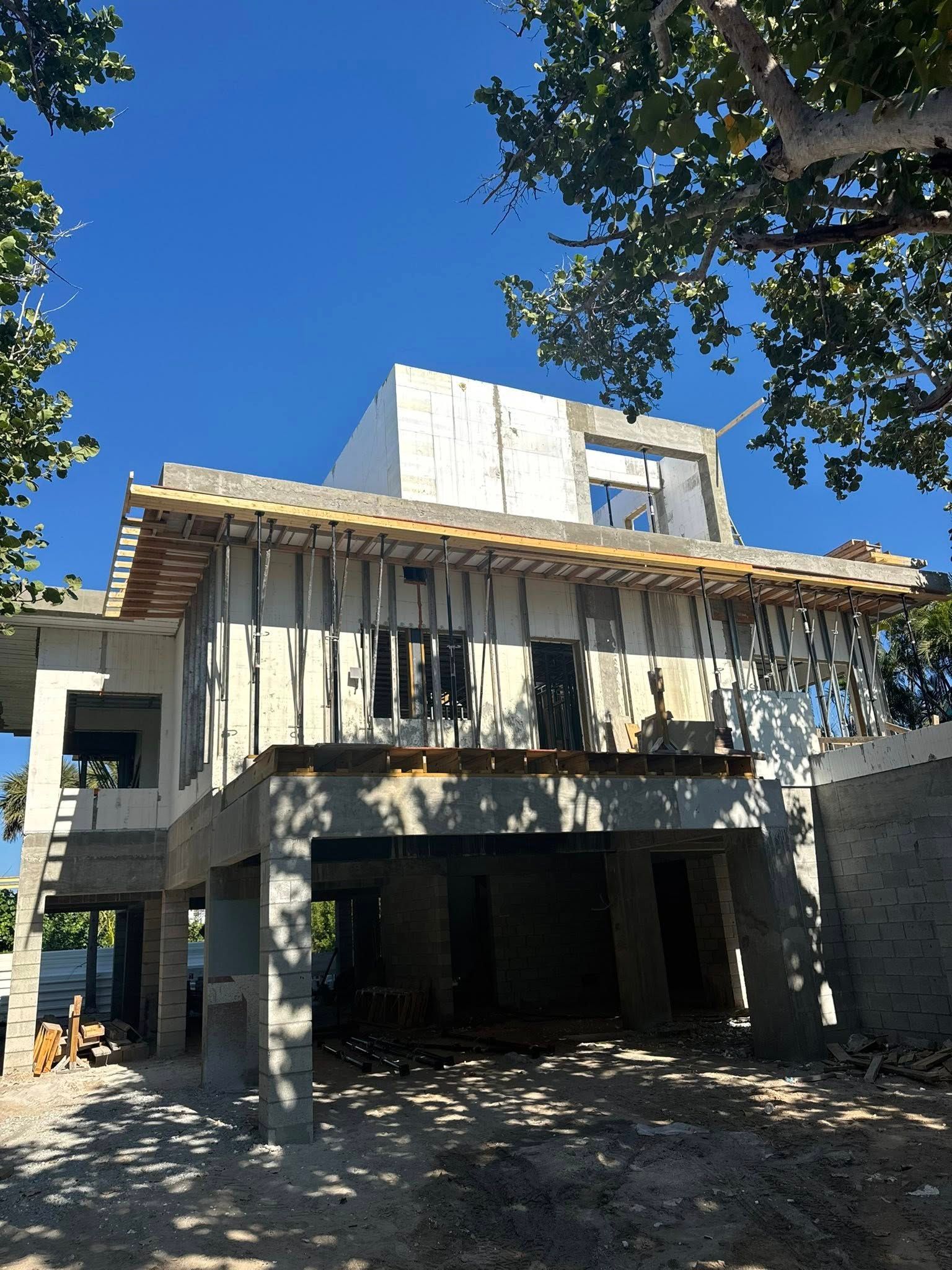
Expansions That Outperform Your Original Structure
ICF Home Additions in Estero for homeowners needing additional living space with better insulation and storm resistance than existing construction
Expanding existing homes with reinforced ICF additions provides an opportunity to improve comfort and efficiency beyond what older portions of the home can deliver, particularly when the original structure uses wood framing with minimal insulation and air sealing typical of construction completed before current energy codes took effect. Room additions, guest suites, expanded living areas, home offices, and safe-room style spaces built with insulated concrete forms create noticeably quieter interiors, more stable temperatures, and structural strength that exceeds the hurricane resistance of conventional framing. Elemental ICF Builders integrates additions with the home's existing architecture in Estero while addressing the growing need for flexible living space as remote work and multigenerational housing arrangements require dedicated areas that remain comfortable even when HVAC systems struggle to condition poorly insulated older sections.
Structural integration techniques connect new ICF walls to existing foundations and roof systems using engineered tie-ins that transfer loads properly while accommodating the different thermal expansion rates between concrete and wood. The addition blends visually with the original home through exterior finishes that match existing materials, but interior performance differences become immediately apparent when temperature fluctuations stop and outside noise drops to barely noticeable levels.
Explore high-performance home expansion options that improve comfort and reduce cooling costs in new living spaces.
Why ICF Additions Work Better Long-Term
Building new spaces with ICF construction means those areas resist humidity intrusion, mold growth, and the wood deterioration that eventually requires costly repairs in older sections of the home. The concrete walls handle Southwest Florida's wet season without absorbing moisture or supporting the fungal growth that develops in wood-framed walls when vapor barriers fail or air conditioning condensation accumulates inside wall cavities. Weather resistance improves dramatically because the addition can withstand storm impacts that might damage the original structure, creating a safe refuge area during hurricanes when older portions of the home experience structural movement or water intrusion.
After the addition is complete, you notice the new spaces maintain set temperatures with minimal HVAC runtime even when the rest of the home struggles to stay cool during afternoon heat. Sound transmission between the addition and outdoor areas drops significantly because dense concrete blocks noise that penetrates wood-frame walls, which becomes particularly valuable for home offices where video calls require quiet backgrounds. Interior wall surfaces remain closer to room temperature year-round, eliminating the cold spots in winter and radiant heat in summer that make exterior rooms uncomfortable in conventionally built homes.
The construction process accounts for connecting new mechanical systems, integrating with existing electrical panels, and ensuring proper drainage around new foundation sections. Long-term maintenance requirements decrease because concrete doesn't require termite treatments, doesn't rot when exposed to moisture, and maintains structural integrity for decades without the periodic inspections needed to catch hidden deterioration in wood framing.
Questions About Adding Space to Your Home
Homeowners considering additions typically ask about structural integration, performance differences, and how new construction affects the comfort and efficiency of their existing home.
How do ICF additions integrate structurally with existing wood-frame homes?
Engineered connections tie new concrete walls to existing foundations and roof systems using anchor bolts and reinforcement that transfer loads properly while accommodating the different expansion rates between materials.
What temperature differences do homeowners notice between ICF additions and older sections?
New spaces maintain stable temperatures with minimal HVAC runtime because the continuous insulation and concrete thermal mass prevent the heat gain and rapid temperature swings common in older wood-framed areas with degraded insulation.
How does weather resistance differ between new ICF spaces and original construction in Estero?
Reinforced concrete walls resist hurricane-force winds and airborne debris that can damage wood framing, which means the addition often becomes the safest area in the home during severe weather events.
When does it make sense to add ICF space rather than expand with conventional framing?
The performance advantage justifies ICF construction when the addition serves as a home office requiring quiet conditions, a safe room for storm protection, or living space where temperature control and energy efficiency are priorities.
Why do ICF additions require less long-term maintenance than wood-frame expansions?
Concrete doesn't rot, absorb moisture, or support termite activity, which eliminates the periodic inspections and preventive treatments required to protect wood framing in Southwest Florida's humid climate.
Elemental ICF Builders designs additions that match your home's architectural style while delivering structural and energy performance improvements. Contact us to discuss floor plans and integration strategies for expanding your living space.