
Homes Built to Last Generations, Not Decades
ICF Custom Home Building in Estero for homeowners planning luxury residences that resist storm damage and humidity deterioration
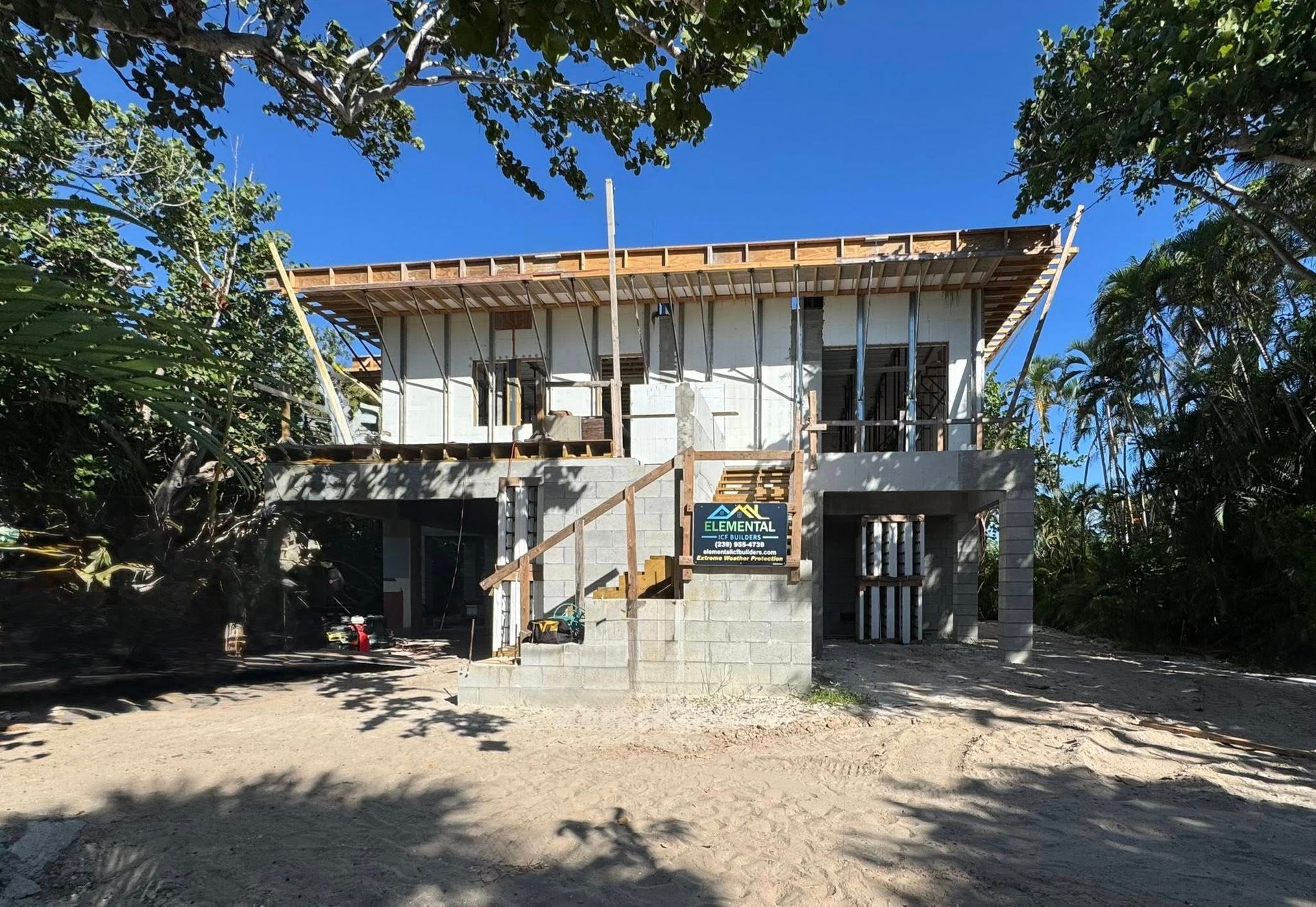
When you walk through a completed ICF home after a major hurricane passes through Southwest Florida, you notice the absence of damage that devastates wood-frame neighborhoods—no missing roof sections, no water intrusion through wall penetrations, and no structural movement that cracks interior finishes. Full-scale custom home construction using insulated concrete forms delivers reinforced concrete durability while accommodating the open floor plans, vaulted ceilings, and architectural details expected in modern luxury residences. Elemental ICF Builders designs custom homes in Estero where wall systems handle Category 4 wind loads without the supplemental bracing and metal strapping required to bring wood framing up to current code minimums.
The construction process begins with custom floor plans that account for concrete wall placement, door and window openings, and utility penetrations before any forms are stacked. Reinforced concrete walls provide the structural strength needed for large open spaces without requiring interior load-bearing walls, which gives you flexibility in room layout and future remodeling that wood-frame homes can't match. Year-round temperature stability improves dramatically because the concrete thermal mass absorbs daytime heat and releases it slowly overnight, preventing the rapid indoor temperature swings common in homes where thin wall assemblies offer minimal resistance to exterior conditions.
Begin planning a custom home that combines architectural design flexibility with high-performance construction standards.
The Difference Reinforced Concrete Makes
ICF walls integrate with conventional roof framing, foundation systems, and interior finishes, which means your home can include premium materials, custom millwork, and high-end fixtures without compromising on structural performance. Steel reinforcement within the concrete core connects to foundation anchor bolts and roof tie-downs, creating a continuous load path that transfers wind uplift forces directly into the ground rather than relying on wood-to-wood connections that loosen over time.
After construction completes, you experience quieter interior spaces because the dense concrete blocks sound transmission from outside, which becomes particularly noticeable during thunderstorms when rain and wind noise barely penetrates into living areas. HVAC systems maintain set temperatures with less runtime because the high R-value insulation and concrete thermal mass reduce heat gain during Florida's long cooling season. Moisture intrusion concerns drop significantly because concrete doesn't absorb water or support mold growth, and the continuous foam insulation eliminates the air leaks that allow humid exterior air to infiltrate wall cavities.
The construction timeline accounts for concrete curing periods and form stacking precision, but the finished structure requires less long-term maintenance than wood-frame homes where periodic inspections are needed to catch rot, termite damage, or fastener corrosion before structural issues develop. Fire resistance improves automatically because concrete doesn't burn, which can reduce insurance premiums in some cases.
What Homeowners Ask About ICF Construction
Clients planning custom homes in Southwest Florida typically want to understand how ICF construction affects design options, timelines, and long-term performance before committing to a building method that differs from standard residential practices.
How does ICF construction affect architectural design flexibility?
Custom floor plans accommodate ICF wall placement without limiting room layouts, ceiling heights, or window configurations, and the structural strength of reinforced concrete allows for larger open spaces without requiring interior support walls.
What happens to interior temperatures during extended power outages after hurricanes?
The concrete thermal mass maintains indoor temperatures for significantly longer periods than wood-frame homes because the walls resist rapid heat transfer, which becomes critical when air conditioning is unavailable for days after severe storms in Estero.
How do ICF walls handle moisture in Florida's humid climate?
Concrete doesn't absorb water or support mold growth, and the foam forms create a continuous vapor barrier that prevents humid exterior air from reaching the concrete core where condensation could form.
When should homeowners start the custom design process?
Planning typically begins six to nine months before construction to finalize floor plans, select finishes, and coordinate engineering details specific to reinforced concrete construction and coastal building code requirements.
Why does concrete construction create quieter living environments?
Dense materials block sound transmission more effectively than cavity-insulated wood walls, which means traffic noise, nearby construction activity, and even lawn equipment operating outside become barely audible inside the home.
Elemental ICF Builders works with homeowners from initial design through final finishes to create custom residences that combine luxury appointments with storm-resistant construction. Contact our team to discuss floor plans and performance specifications for your Southwest Florida property.